

Designing in the Age of AI: Why Creative Direction Matters More Than Ever
Artificial intelligence is changing how design work gets done.
Tasks that once took days can now happen in minutes. Content can be generated, layouts can be explored, and variations can be produced at a scale that was previously impossible.
But despite this shift, one thing remains constant:
Design is still about making decisions.
And that’s where the role of the designer becomes even more important.
The Misconception: AI Replaces Design
Much of the conversation around AI focuses on automation.
Can AI generate layouts?
Can it write content?
Can it replace designers?
Can it write content?
Can it replace designers?
In reality, AI changes how design is produced—but not why it exists.
Across industries, AI is increasingly positioned as a tool that enhances human capability rather than replacing it—automating repetitive tasks while allowing people to focus on higher-value thinking and creativity.¹
In healthcare and life sciences especially, clarity, trust, and accuracy are essential. These are not problems that can be solved through automation alone.
AI can generate outputs.
But it cannot determine what matters.
The Shift: From Execution to Direction
As production becomes faster, the role of the designer shifts.
Less time is spent on:
• manual production
• repetitive tasks
• single-solution execution
More time is spent on:
• defining the problem
• shaping the system
• guiding decisions
• ensuring clarity
This shift is already visible in how AI systems are being designed. As Salesforce notes, modern AI systems increasingly act as collaborators that make decisions and operate within workflows—requiring designers to shape how they behave, communicate, and integrate into human experiences.²
This is not a reduction of design. It is an elevation of it.
Designers move from makers of assets to directors of systems.
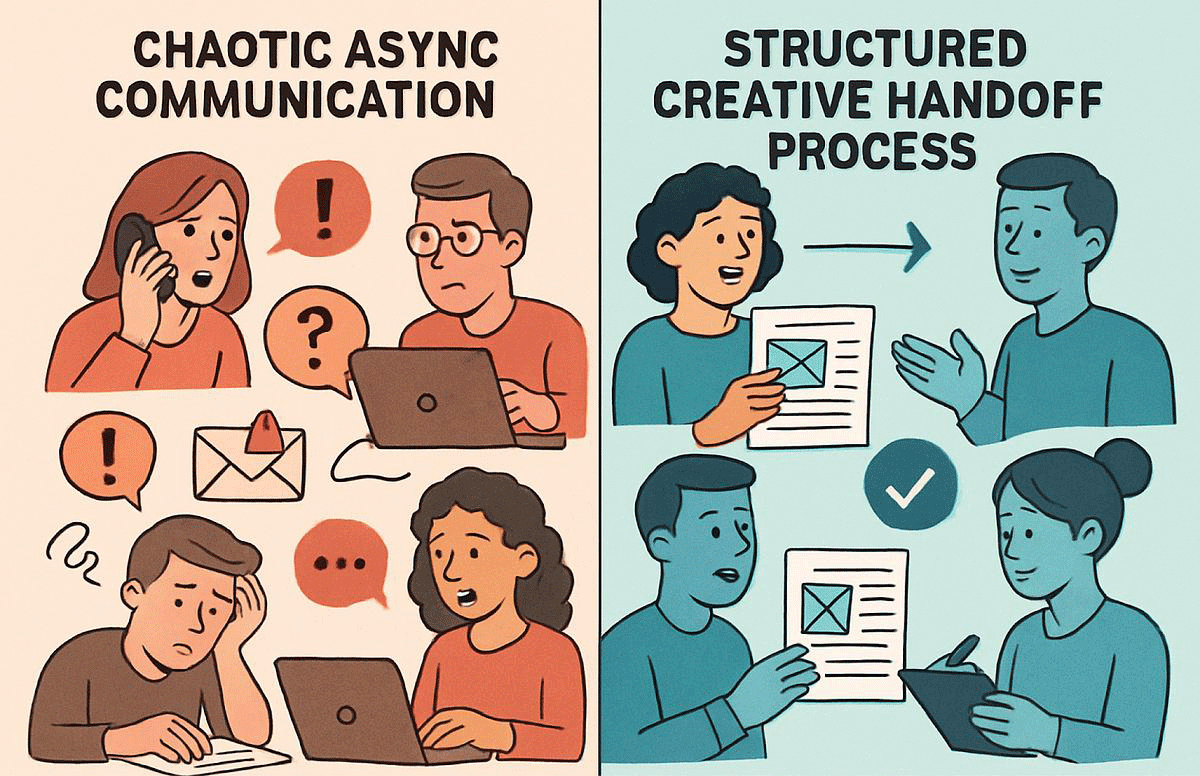
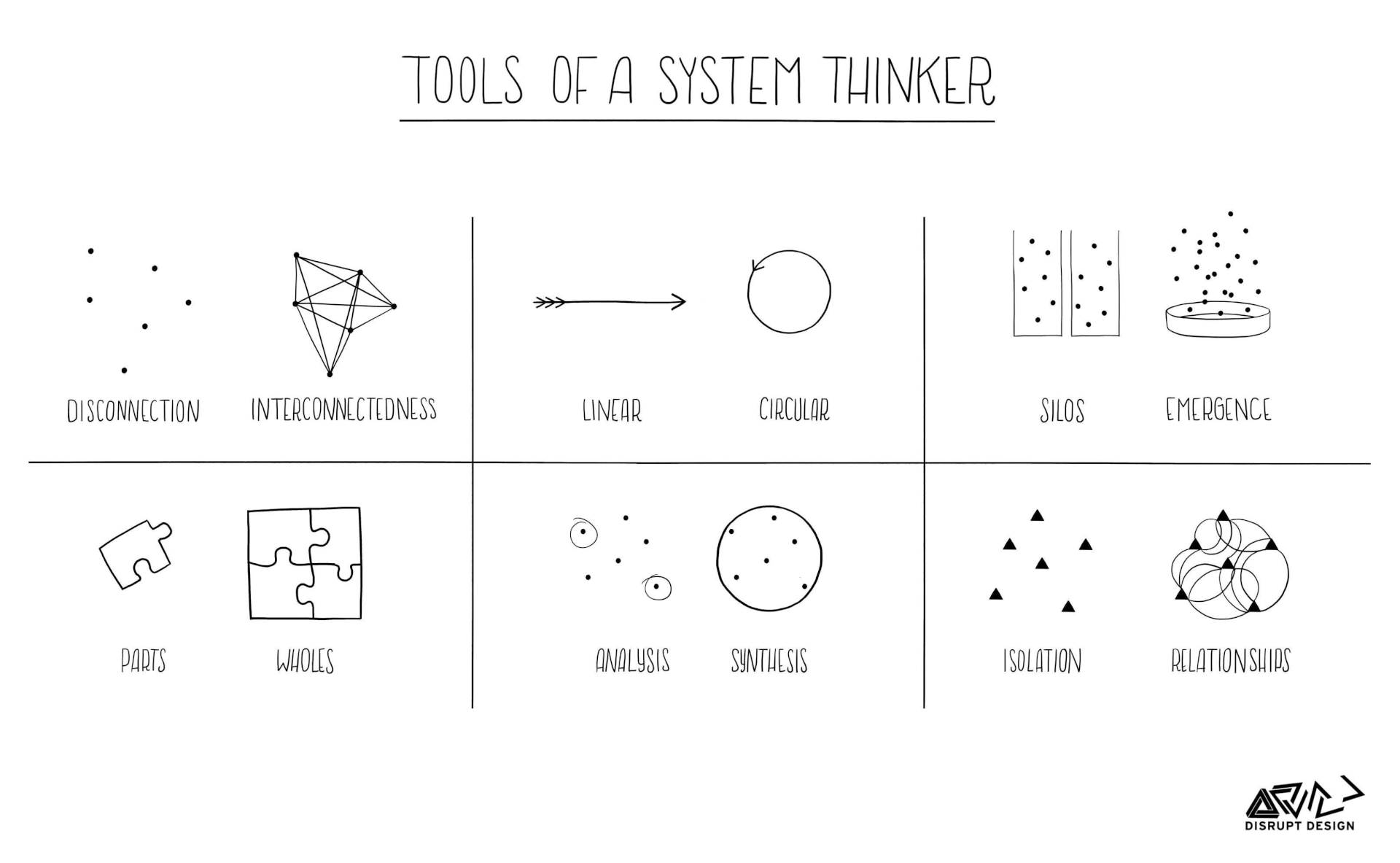
Designing Systems, Not Outputs
https://medium.com/ux-management/design-ops-at-scale-building-resilient-creative-workflows-for-distributed-teams-f7b08acf45d8
https://medium.com/disruptive-design/tools-for-systems-thinkers-the-6-fundamental-concepts-of-systems-thinking-379cdac3dc6a
AI accelerates output. Systems create coherence.
AI accelerates the creation of individual outputs.
But without structure, those outputs quickly become inconsistent.
This is why the importance of systems—already central to modern design—becomes even more critical.
Design systems create a shared language across teams, enabling consistency, scalability, and clarity across products and experiences. As noted by design agency thinking from Significa, a design system brings teams together by giving them a shared foundation—reducing friction and ensuring alignment as products grow.³
AI does not replace this need. It amplifies it.
Because when content is generated at scale, consistency must also scale.
Human Judgment as the Differentiator
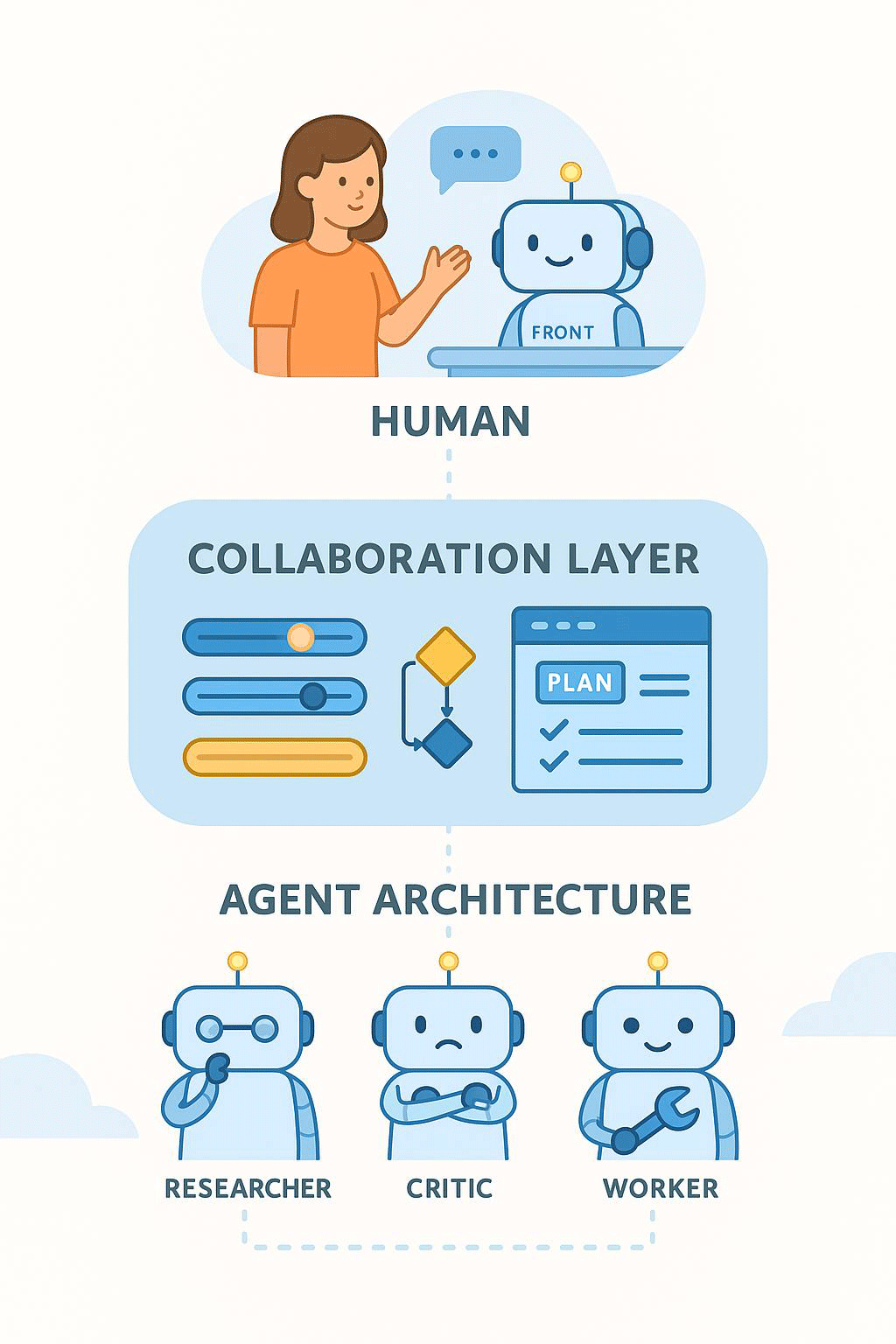
AI can produce options. But it cannot evaluate them with context.
It cannot:
• understand nuance in communication
• interpret emotional tone
• prioritize clarity over novelty
• make trade-offs between competing goals
Design, especially in complex fields like healthcare, requires judgment.
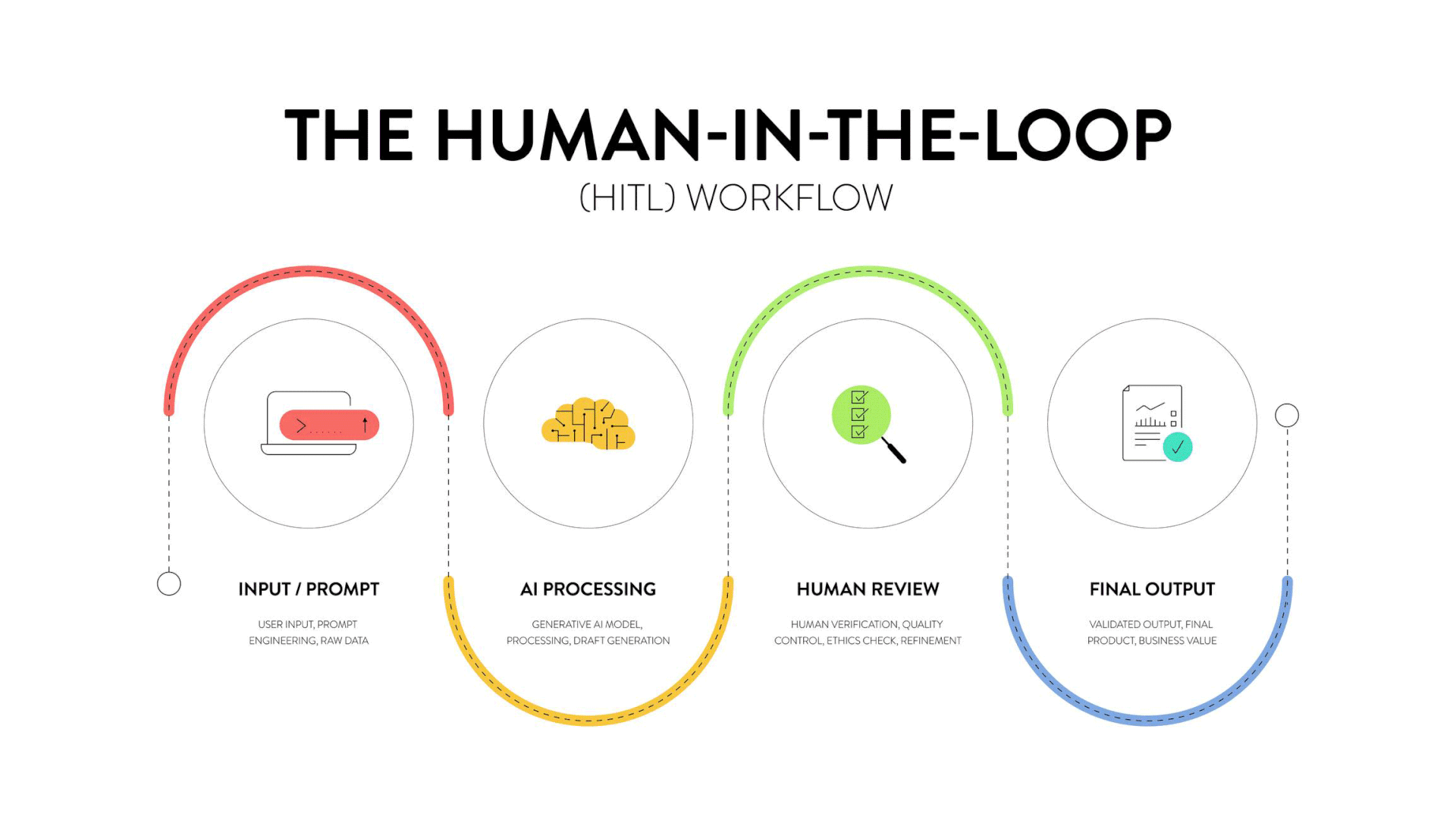
Human-centered AI approaches emphasize that systems should support people—enhancing their ability to think, create, and make decisions rather than replacing them. Research highlighted by Amazon Science shows how AI is most effective when it augments human decision-making—helping experts interpret complex data rather than replacing their judgment⁴
This is where the designer remains essential.
https://medium.com/%40milesk_33/ux-trust-and-the-psychology-of-ai-agents-75fe8d997900
The Human-in-the-Loop (HITL) Workflow Infographic Vector, AI Artificial Intelligence Process Diagram with Human Review, Feedback Loop, Collaboration and Machine
AI generates possibilities. Human judgment defines direction.
A Practical Perspective
In my work, AI is not the product. It is part of the process.
It can help:
• generate variations quickly
• explore visual directions
• accelerate production workflows
But the work still depends on:
• defining a clear visual system
• establishing hierarchy and structure
• aligning communication across touchpoints
The goal is not speed alone. It is clarity at scale.
The Risk: More Output, Less Clarity
AI makes it easier to produce more.
More layouts.
More content.
More variations.
More content.
More variations.
But more does not mean better.
Without direction, increased output can lead to:
• inconsistency
• visual noise
• diluted messaging
The challenge is no longer creating design. It is maintaining clarity within abundance.
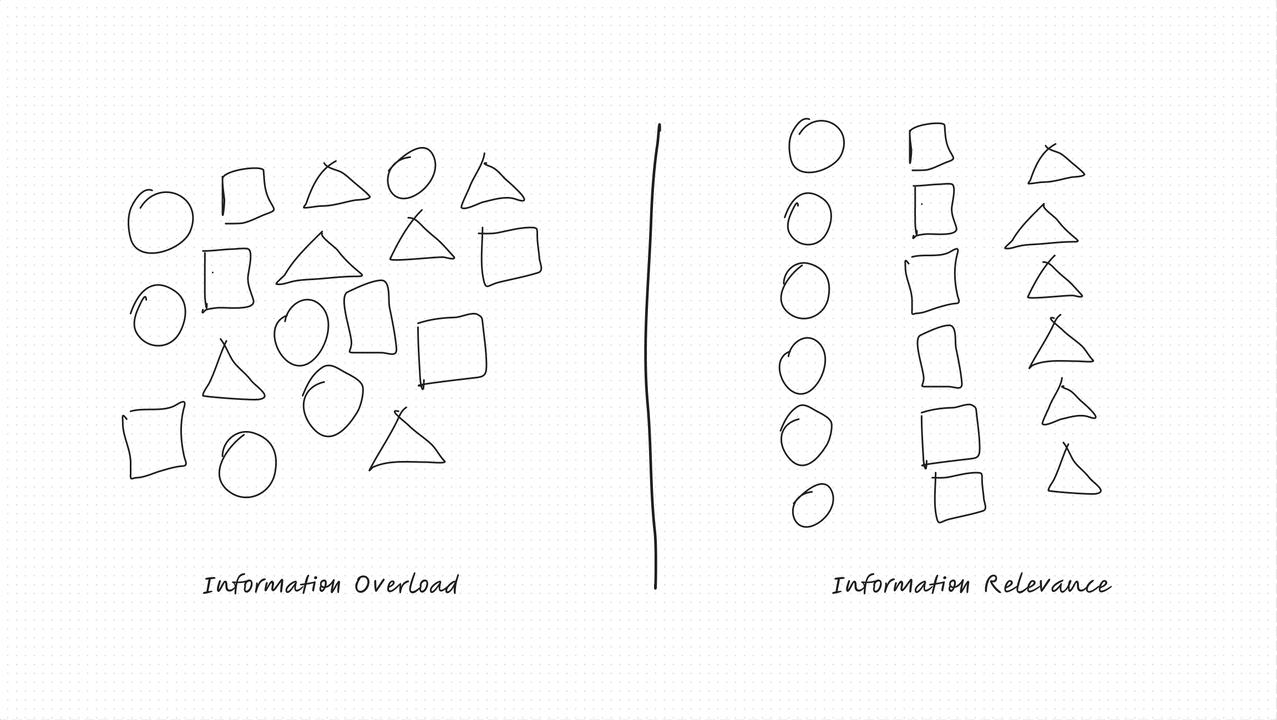
https://www.linkedin.com/pulse/information-overload-hidden-obstacle-small-business-success-sithole-hnxff
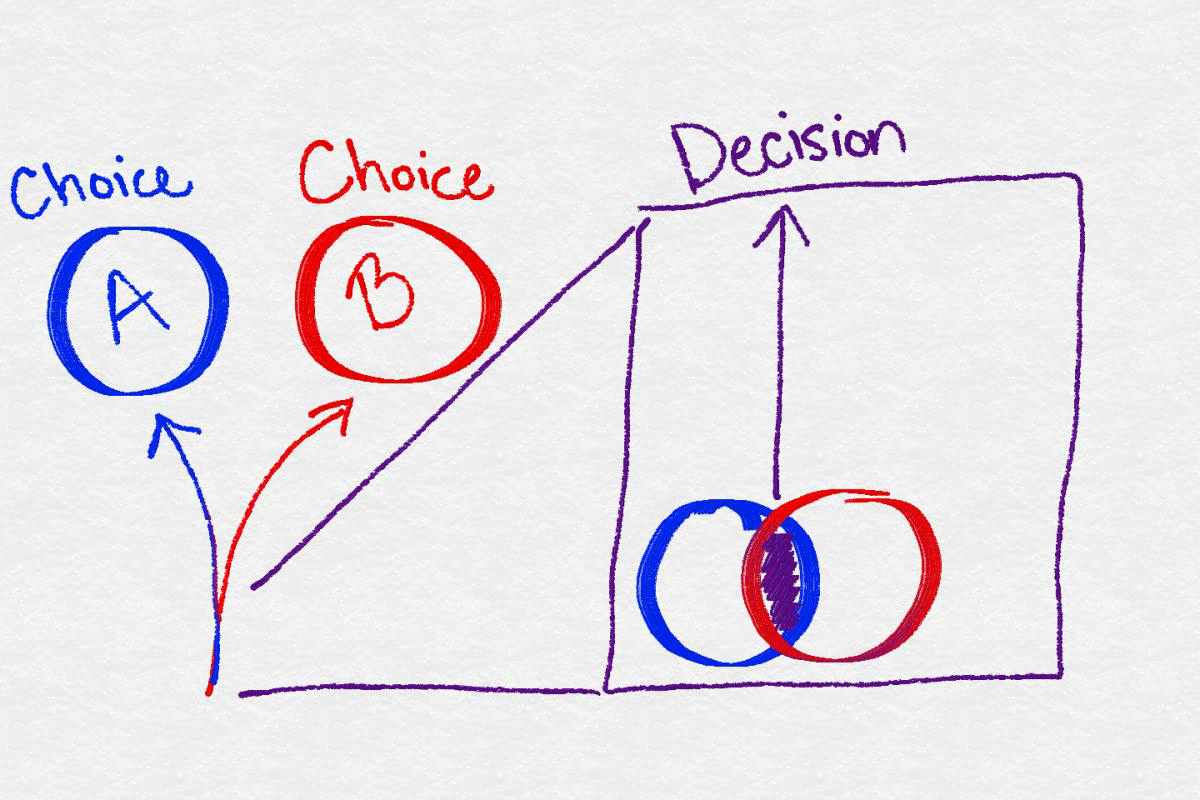
https://medium.com/sonderbodhi/choosing-vs-deciding-fbd0b100f425
More output doesn’t create clarity—structure does.
Why This Matters
We are entering a phase where:
• content is easier to create
• systems are more complex
• expectations for clarity are higher
Organizations that succeed will not be the ones that produce the most.
They will be the ones that:
• communicate clearly
• maintain consistency
• design with intention
AI enables scale. Design provides meaning.
Closing Thought
AI changes the tools.
It changes the speed.
But it does not change the goal.
Design is still about making complex ideas clear.
And in a world where more can be created than ever before,
clarity becomes not just valuable—but essential.
clarity becomes not just valuable—but essential.
This is an area I’m actively exploring in my own work—rethinking how design systems and AI workflows can work together to deliver clarity at scale.
References and Further Reading